
Life cycle assessment for construction
LCAbyg
Web-based version of LCAbyg – with new features, higher quality, and full support for the climate requirements in BR18 (2023 and 2025). Stable operation, quality assurance, and transparency, so you can trust both the tool and the results. Expected to launch in August, with a paid subscription. Existing versions can still be used and downloaded as before.
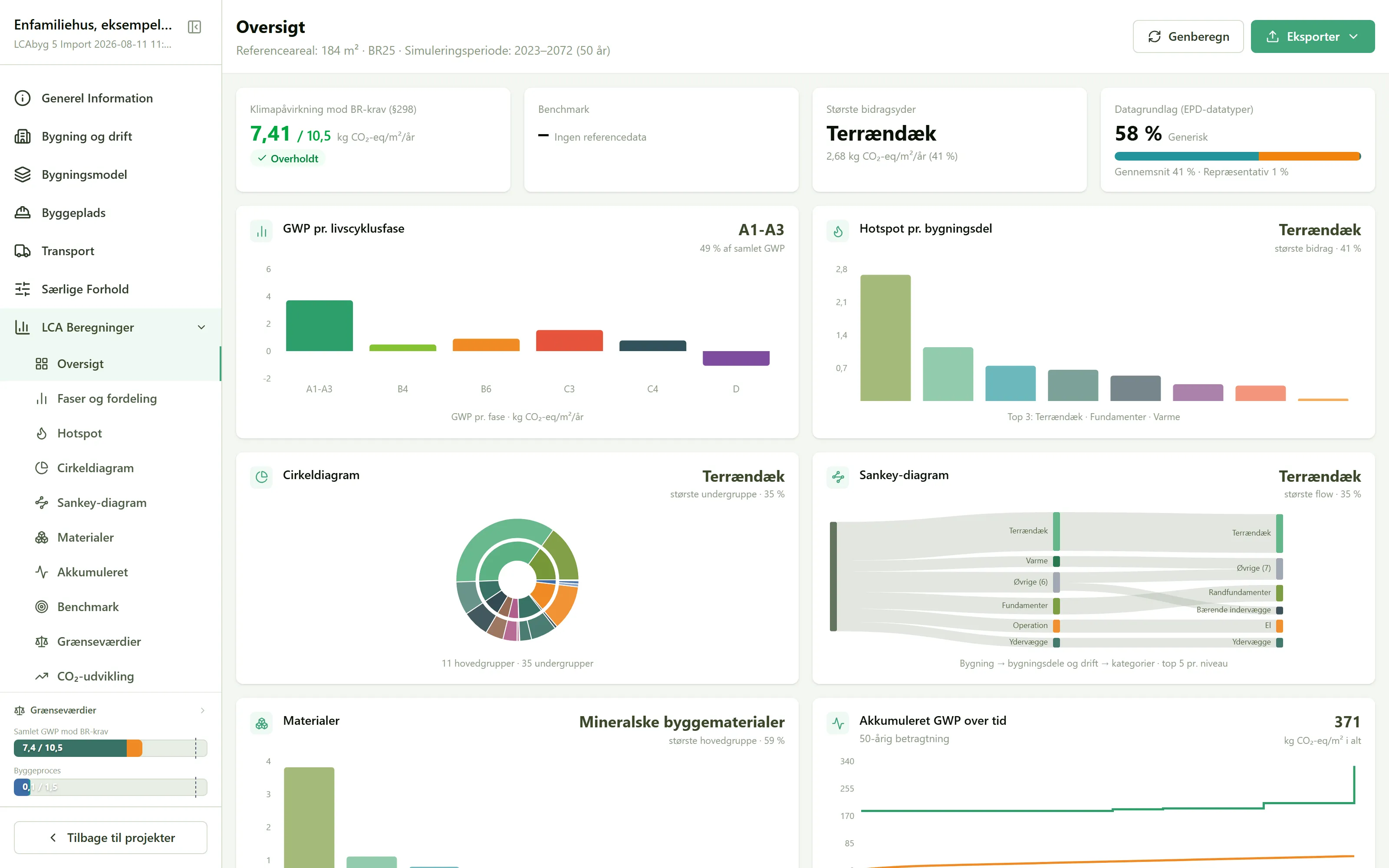
New version
What's new?
The new version of LCAbyg has landed with a boost to both features and quality. We won't touch your existing projects and previous versions — they can still be used and downloaded as before.
Full support for climate requirements
Calculate according to the climate requirements in both BR18 and BR25, as well as DGNB 2023 and DGNB 2025.
Digital EPDs
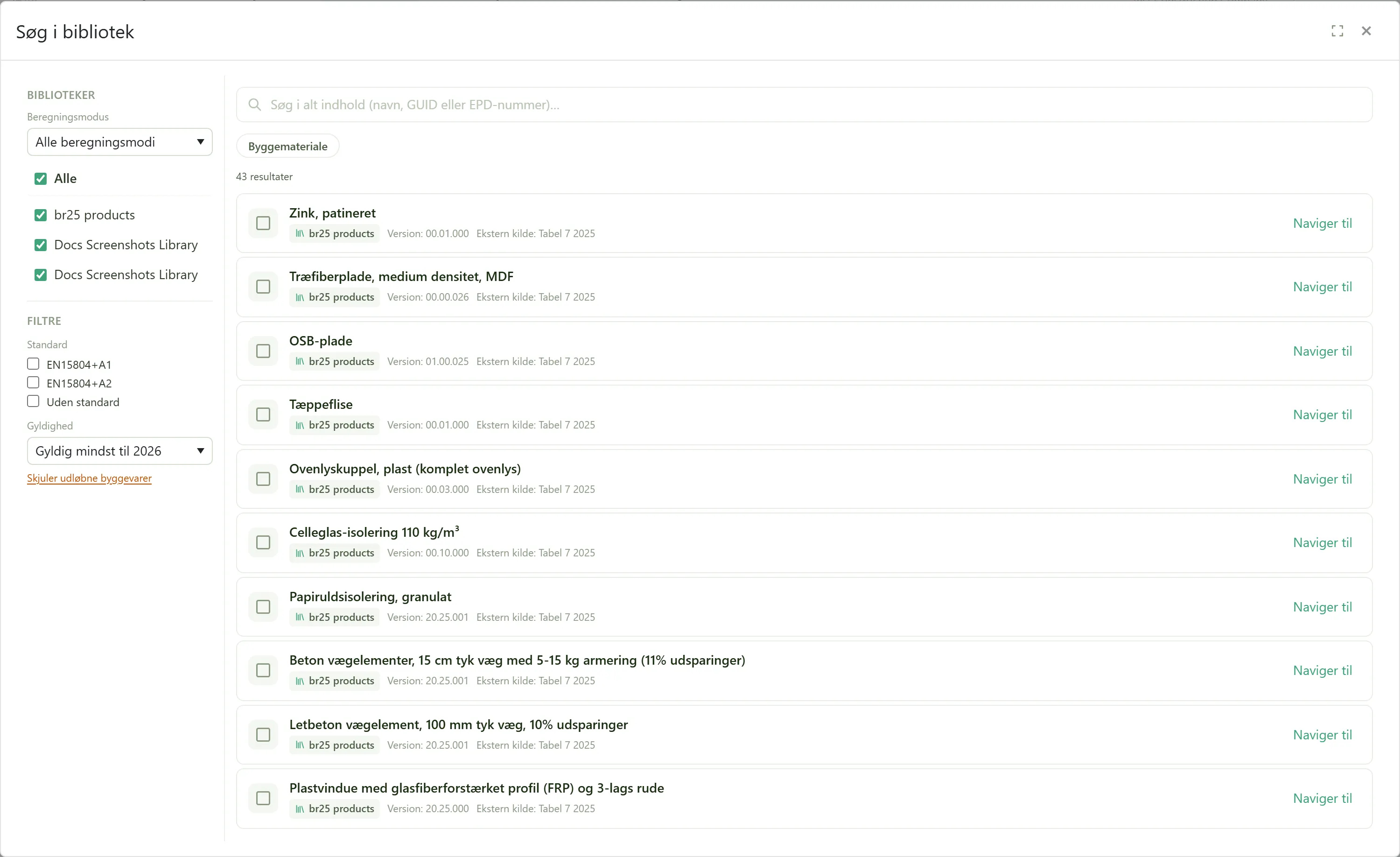
Import the digital EPDs directly instead of entering data manually.
Compare scenarios
Version projects and compare scenarios to see the effect of your choices.
Higher quality
More stable operation and better quality assurance, so you can trust the results.
About the tool
What is LCAbyg?
LCAbyg makes it easy to calculate a building's overall climate and environmental impact. You enter data about materials, building elements, and energy consumption, and the program performs the calculations. The results are presented in easy-to-understand figures and reports that can be used for documentation to authorities and certification schemes.
The tool supports the assessment of both new construction and renovation projects and makes it possible to analyze environmental impacts. This gives the user a complete overview of the building's impact throughout its entire life cycle and makes it possible to identify the building elements and materials that contribute most to the overall carbon footprint.
At the same time, the tool helps meet the requirements for life cycle assessments in the Building Regulations, as well as documentation requirements for various sustainability certifications.
Learn more about LCAbyg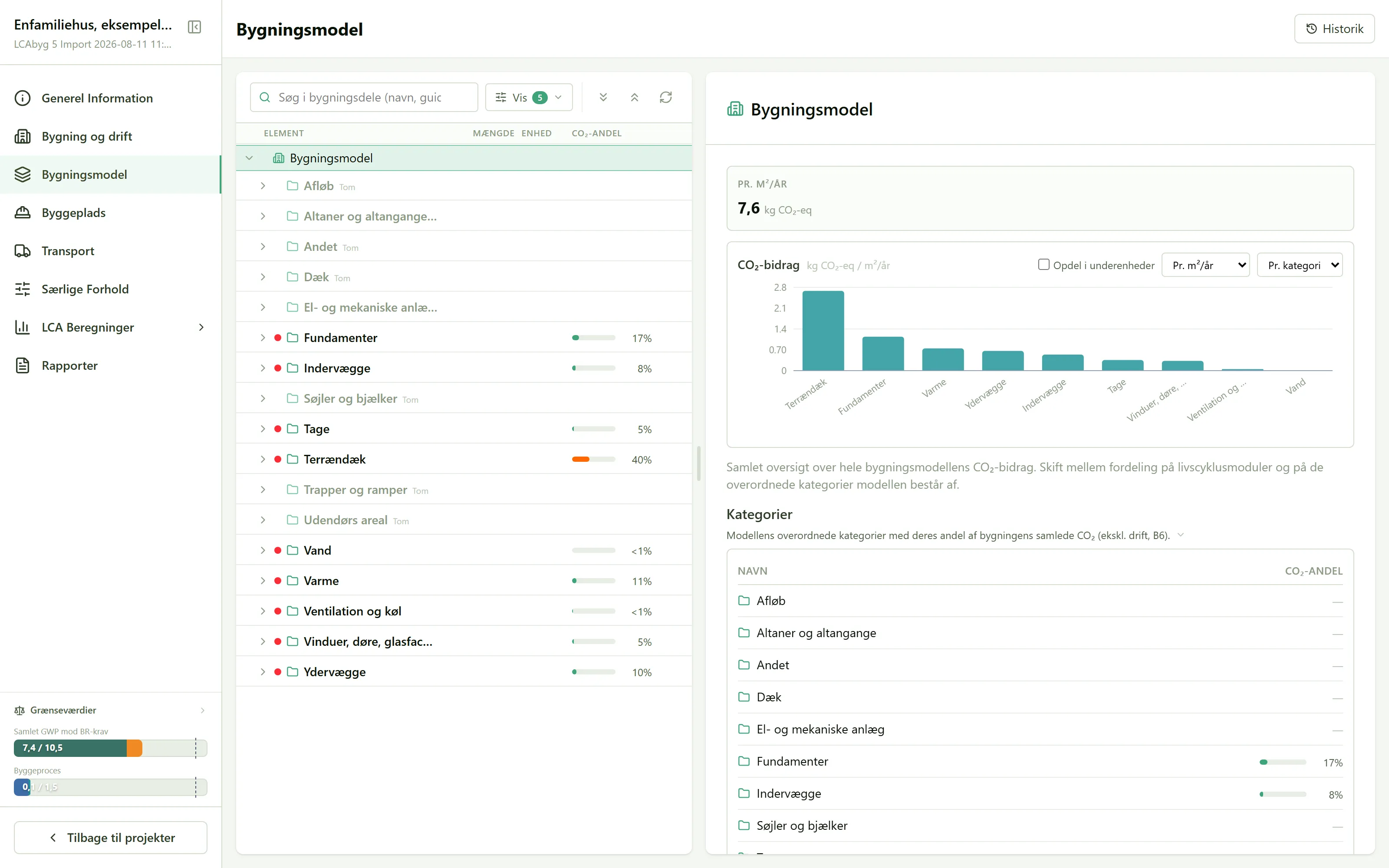
Use cases
What can LCAbyg be used for?
LCAbyg can be used throughout your entire project process, from LCA of early design proposals to the final documentation for authorities and certification schemes. See which version you can use.
Building Regulations
LCAbyg can be used to document the climate requirements in BR18 (2023) and BR18 (2025).
DGNB certification
LCAbyg supports the Danish versions of DGNB. The new version supports both DGNB 2023 and DGNB 2025 via RFBB's toolcheck. For other manuals, contact RFBB for the correct version.
BREEAM certification
Use LCAbyg 2023 for BREEAM Version 6 (and earlier) — applies to both International New Construction and International Refurbishment and Fit-Out (RFO).
Pricing
Pay for those who calculate
Viewers and external contributors are always free. Annual license per named user.
Basic
DKK 7,900 /year, per user
- LCA calculations per the building regulations
- Access to the material and EPD library
- Export to Excel
- Free viewers and contributors
Pro
DKK 11,900 /year, per user
- Everything in Basic
- Versioning and scenarios for projects
- Shared company libraries
- Component import and export
Want to see it in practice before choosing a package? Book a demo and get a walkthrough tailored to your projects.
Book a demoResearch
Rooted in research
LCAbyg is developed today by LCAbyg ApS and was originally developed by BUILD at Aalborg University in close collaboration with the Danish construction industry. Since 2014, the tool has been continuously developed with support from, among others, the Villum Foundation, Realdania, and the Danish Energy Agency.
LCAbyg continues to build on the same professional and scientific foundation that was created under BUILD. Collaboration with the research community remains close, and LCAbyg regularly contributes calculation tools and methods to research projects and analyses. This ensures that the tool is developed in step with the latest knowledge, current standards, and the industry's needs.
LCAbyg is not just a calculation tool, but a research-based tool that can be used to document buildings' climate and environmental impact.
Read about the development